In an increasingly digital world, proving who we are has become more important than ever. Every day, billions of people unlock smartphones, access bank accounts, log into websites, pass through airport security checkpoints, and verify their identities online. Traditionally, identity verification has relied on passwords, PINs, identification cards, and security questions. While these methods have served us for decades, they often come with significant weaknesses. Passwords can be forgotten, stolen, guessed, or leaked in data breaches. Physical identification cards can be lost, forged, or stolen.
As cyber threats continue to grow and digital services become more integrated into everyday life, organizations and individuals need stronger, faster, and more reliable methods of identity verification. This need has led to the rapid adoption of biometric authentication.
Biometric authentication uses unique physical or behavioral characteristics to verify a person’s identity. Instead of relying on something a person knows, such as a password, or something they possess, such as a security card, biometric systems rely on characteristics that are inherently tied to the individual. Fingerprints, facial features, iris patterns, voice characteristics, and even typing behavior can serve as digital identifiers.
Today, biometric authentication is used in smartphones, banking systems, government programs, healthcare institutions, airports, workplaces, and countless other environments. As technology continues to advance, biometrics is increasingly viewed as the future of secure identity verification.
This article explores what biometric authentication is, how it works, its history, types, benefits, limitations, applications, privacy concerns, and its growing role in the future of cybersecurity.
What Is Biometric Authentication?
Biometric authentication is a security process that verifies an individual’s identity using unique biological or behavioral characteristics.
The term “biometric” comes from two Greek words:
- Bio meaning life
- Metric meaning measurement
Biometric authentication essentially means measuring and analyzing characteristics associated with a living person.
Unlike passwords or PIN codes, biometric traits are generally unique to each individual and difficult to replicate accurately.
Examples of biometric identifiers include:
- Fingerprints
- Facial features
- Iris patterns
- Retinal patterns
- Voice characteristics
- Hand geometry
- Vein patterns
- Typing behavior
- Walking patterns
The goal of biometric authentication is to determine whether a person is truly who they claim to be.
Why Identity Verification Matters
Identity verification is a fundamental component of security.
Every organization must answer a critical question:
“How can we verify that a person attempting to access a system is actually authorized to do so?”
Without reliable identity verification, unauthorized individuals could gain access to:
- Financial accounts
- Medical records
- Government databases
- Corporate systems
- Personal devices
- Sensitive communications
Traditional authentication methods often depend on information that can be stolen or guessed.
Examples include:
- Passwords
- PIN codes
- Security questions
- Access cards
Biometric authentication seeks to solve many of these weaknesses by using characteristics that are inherently linked to an individual.
The Evolution of Authentication Methods
Authentication has evolved significantly over time.
Knowledge-Based Authentication
The earliest digital systems relied primarily on passwords and PINs.
Users proved their identity by providing information they knew.
While simple, this approach has limitations:
- Passwords can be forgotten
- Passwords can be stolen
- Users often choose weak passwords
- Password reuse creates vulnerabilities
Possession-Based Authentication
Later systems introduced physical authentication factors.
Examples include:
- Smart cards
- Security tokens
- Access badges
These systems improved security but introduced new challenges:
- Devices can be lost
- Devices can be stolen
- Replacement costs can be high
Biometric Authentication
Biometric systems introduced a third category:
Something you are.
This approach uses biological and behavioral traits that are difficult to duplicate, offering a potentially stronger form of identity verification.
How Biometric Authentication Works
Biometric authentication generally follows a multi-step process.
Enrollment
The first step is enrollment.
During enrollment:
- A user’s biometric characteristic is captured.
- The system analyzes unique features.
- A digital template is created.
- The template is securely stored.
Importantly, most systems do not store an actual image of the fingerprint or face. Instead, they store mathematical representations of key characteristics.
Capture
When authentication is needed, the biometric trait is captured again.
Examples include:
- Scanning a fingerprint
- Taking a facial image
- Recording a voice sample
Feature Extraction
The system identifies important characteristics within the biometric sample.
These features are converted into a digital format suitable for comparison.
Matching
The new sample is compared against the stored template.
If the similarity exceeds a predefined threshold, authentication is successful.
Decision
The system either:
- Grants access
- Denies access
This entire process often takes less than a second.
What Makes Biometrics Unique?
Biometric authentication relies on characteristics that possess specific qualities.
Uniqueness
Biometric traits should differ between individuals.
For example:
- Fingerprints are highly distinctive.
- Iris patterns are unique.
- Facial structures vary significantly.
Permanence
A biometric characteristic should remain relatively stable over time.
Fingerprints and iris patterns generally remain consistent throughout life.
Universality
Most people should possess the characteristic.
For example, nearly everyone has fingerprints and facial features.
Measurability
The trait must be measurable using technology.
Modern sensors can capture biometric data quickly and accurately.
Types of Biometric Authentication
Biometric authentication can be divided into two broad categories:
- Physiological biometrics
- Behavioral biometrics
Physiological Biometrics
Physiological biometrics are based on physical characteristics of the body.
Fingerprint Recognition
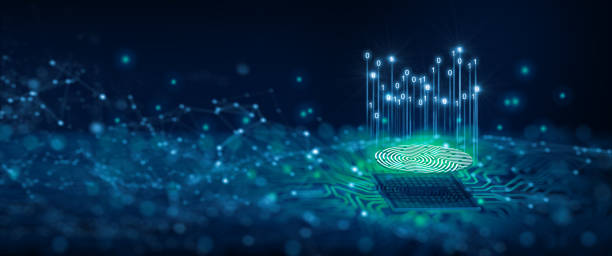
Fingerprint recognition is the most widely used biometric technology.
Fingerprints contain unique ridge patterns that can be analyzed and compared.
Modern fingerprint systems examine:
- Ridge endings
- Bifurcations
- Pattern structures
- Minutiae points
Fingerprint authentication is commonly used in:
- Smartphones
- Laptops
- Door access systems
- Banking applications
Facial Recognition
Facial recognition analyzes facial features to identify individuals.
The system may examine:
- Distance between eyes
- Nose shape
- Jawline structure
- Facial contours
Advanced facial recognition systems use artificial intelligence to improve accuracy.
Facial authentication has become increasingly common in consumer devices and security applications.
Iris Recognition
The iris is the colored ring surrounding the pupil.
Iris patterns are highly complex and unique.
Iris recognition offers:
- Exceptional accuracy
- High security
- Long-term stability
Many experts consider iris recognition among the most reliable biometric methods.
Retina Recognition
Retina recognition examines blood vessel patterns inside the eye.
These patterns are highly unique.
Although extremely accurate, retina scanning is less common because it requires specialized equipment and closer user interaction.
Hand Geometry
Hand geometry systems measure characteristics such as:
- Finger length
- Finger width
- Hand shape
- Palm dimensions
While less unique than fingerprints or irises, hand geometry can still provide useful authentication.
Vein Recognition
Vein recognition analyzes blood vessel patterns beneath the skin.
Common approaches include:
- Palm vein recognition
- Finger vein recognition
Vein patterns are difficult to forge because they exist internally rather than externally.
Behavioral Biometrics
Behavioral biometrics focus on how people perform actions.
Voice Recognition
Voice authentication analyzes vocal characteristics.
Factors include:
- Pitch
- Tone
- Frequency
- Speech patterns
Voice biometrics are often used in:
- Customer service systems
- Telephone banking
- Virtual assistants
Keystroke Dynamics
Every person types differently.
Keystroke dynamics analyze:
- Typing speed
- Key pressure
- Rhythm
- Timing patterns
These subtle behaviors can help verify identity.
Signature Recognition
Digital signature systems analyze how a signature is written rather than merely examining its appearance.
Factors include:
- Stroke order
- Writing speed
- Pen pressure
Gait Recognition
Gait recognition identifies individuals based on walking patterns.
Factors include:
- Stride length
- Movement patterns
- Body posture
Researchers continue exploring gait recognition for security applications.
Fingerprint Authentication Explained
Fingerprint authentication remains the most familiar biometric technology.
Each fingerprint contains distinctive ridge structures.
Modern fingerprint scanners capture these patterns and compare them to stored templates.
Advantages include:
- High accuracy
- Fast performance
- Low cost
- Wide adoption
Fingerprint authentication is now standard on many consumer devices.
Facial Recognition Explained
Facial recognition technology has advanced dramatically in recent years.
Modern systems use sophisticated algorithms to create detailed facial maps.
The technology can operate using:
- Photographs
- Video feeds
- Real-time cameras
Facial recognition offers convenience because users do not need physical contact with sensors.
However, it also raises significant privacy concerns.
Iris and Retina Authentication
Eye-based biometrics provide some of the highest levels of accuracy.
Why Iris Patterns Are Unique
The intricate patterns within the iris form randomly during development.
Even identical twins have different iris patterns.
Why Eye Biometrics Are Powerful
Benefits include:
- Extremely low false-match rates
- Long-term stability
- High uniqueness
Because of their accuracy, eye-based biometrics are frequently used in high-security environments.
Voice Authentication
Voice authentication has become increasingly common due to the popularity of smartphones and voice assistants.
The human voice contains numerous unique characteristics.
Modern voice systems analyze:
- Vocal tract shape
- Speech rhythm
- Acoustic properties
Voice authentication allows hands-free identity verification.
Multimodal Biometrics
Some systems combine multiple biometric methods.
This approach is called multimodal biometrics.
Examples include:
- Face and fingerprint
- Iris and voice
- Fingerprint and vein recognition
Combining multiple factors often improves accuracy and security.
Biometric Authentication vs Passwords
Passwords have long been the primary authentication method.
However, they suffer from many weaknesses.
Password Problems
Common issues include:
- Weak passwords
- Password reuse
- Phishing attacks
- Credential theft
- Forgotten passwords
Biometric Advantages
Biometrics provide:
- Greater convenience
- Faster access
- Reduced password fatigue
- Stronger identity verification
Despite these advantages, biometrics are not a complete replacement for passwords in every situation.
Biometric Authentication and Multi-Factor Authentication
Many organizations combine biometrics with additional security factors.
This is known as multi-factor authentication (MFA).
Authentication factors typically fall into three categories:
Something You Know
Examples include:
- Passwords
- PIN codes
Something You Have
Examples include:
- Security tokens
- Smartphones
- Smart cards
Something You Are
Examples include:
- Fingerprints
- Facial features
- Iris patterns
Combining multiple factors significantly increases security.
Applications of Biometric Authentication
Biometric systems are used across numerous industries.
Biometrics in Smartphones
Smartphones have helped popularize biometric authentication.
Common uses include:
- Device unlocking
- Mobile payments
- App authentication
- Secure storage access
Consumers increasingly prefer biometric login methods because of their convenience.
Biometrics in Banking
Financial institutions use biometrics to strengthen security.
Applications include:
- Mobile banking authentication
- ATM access
- Customer verification
- Fraud prevention
Biometrics help reduce identity theft and unauthorized account access.
Biometrics in Healthcare
Healthcare organizations handle sensitive patient information.
Biometric systems help:
- Verify patient identities
- Control access to records
- Prevent fraud
- Improve security
Accurate identification can also improve patient safety.
Biometrics in Government
Governments use biometric systems for:
- National identification programs
- Border control
- Passport verification
- Law enforcement
Many countries maintain large biometric databases for identification purposes.
Biometrics in Airports and Travel
Airports increasingly rely on biometric technology.
Applications include:
- Passenger screening
- Passport verification
- Automated border control
- Boarding processes
Biometrics can improve both security and efficiency.
Biometrics in the Workplace
Organizations use biometrics for:
- Employee authentication
- Building access control
- Time tracking
- Secure system access
Biometric systems help reduce unauthorized entry and attendance fraud.
Biometrics in Law Enforcement
Law enforcement agencies use biometrics for:
- Criminal identification
- Suspect verification
- Forensic investigations
- Missing person identification
Fingerprint databases remain one of the most valuable investigative tools.
Benefits of Biometric Authentication
Biometric authentication offers numerous advantages.
Improved Security
Biometric traits are generally harder to steal than passwords.
Convenience
Users do not need to remember complex credentials.
Faster Authentication
Most biometric systems operate within seconds.
Reduced Fraud
Biometrics can make impersonation more difficult.
Better User Experience
Many users find biometric authentication more intuitive than traditional methods.
Challenges and Limitations
Despite its advantages, biometric authentication is not perfect.
False Acceptance
A system may incorrectly grant access to an unauthorized user.
This is known as a false acceptance.
False Rejection
A system may incorrectly deny access to an authorized user.
This is known as a false rejection.
Sensor Limitations
Environmental conditions can affect performance.
Examples include:
- Poor lighting
- Dirty sensors
- Background noise
Physical Changes
Certain biometric traits may be affected by:
- Injuries
- Aging
- Medical conditions
These factors can sometimes reduce accuracy.
Privacy Concerns
Privacy remains one of the most significant issues surrounding biometrics.
Unlike passwords, biometric characteristics cannot easily be changed.
If a password is compromised, it can be replaced.
A fingerprint cannot.
Privacy concerns include:
- Data collection
- Surveillance
- Tracking
- Data breaches
Organizations must handle biometric information responsibly.
How Biometric Data Is Stored
Modern systems typically store biometric templates rather than raw images.
Templates contain mathematical representations of biometric features.
This approach improves security and reduces privacy risks.
Many systems also encrypt stored biometric data.
Biometric Security Risks
Although biometric systems enhance security, they also face threats.
Examples include:
- Spoofing attacks
- Template theft
- Sensor manipulation
- Deepfake technologies
Security measures continue evolving to address these risks.
Liveness Detection
Liveness detection helps determine whether a biometric sample comes from a real person.
Examples include:
- Blink detection
- Eye movement analysis
- Blood flow monitoring
- Skin texture analysis
Liveness detection reduces the risk of spoofing attacks.
Artificial Intelligence and Biometrics
Artificial intelligence has significantly improved biometric systems.
AI helps:
- Increase accuracy
- Improve matching performance
- Detect fraud
- Analyze complex patterns
Machine learning continues driving innovation in biometric authentication.
Biometric Authentication and Cybersecurity
Biometrics play an increasingly important role in cybersecurity.
Applications include:
- Account protection
- Identity verification
- Fraud prevention
- Secure access control
As cyber threats grow, organizations increasingly view biometrics as a valuable security tool.
Regulations and Legal Considerations
Governments have introduced regulations governing biometric data.
These laws often address:
- Consent requirements
- Data storage practices
- Privacy protections
- Security standards
Organizations must comply with applicable regulations when collecting biometric information.
The Future of Biometric Authentication
Biometric technology continues advancing rapidly.
Future developments may include:
- More accurate sensors
- Contactless authentication
- Continuous identity verification
- Enhanced AI integration
- Stronger privacy protections
Emerging technologies will likely expand biometric adoption across industries.
Continuous Authentication
Traditional authentication occurs only at login.
Continuous authentication monitors users throughout a session.
Behavioral biometrics may analyze:
- Typing behavior
- Mouse movements
- Device interactions
This approach can provide ongoing security.
Biometrics and Passwordless Authentication
Many experts believe the future will involve passwordless authentication.
Biometrics are central to this vision.
Benefits may include:
- Improved security
- Better user experience
- Reduced phishing risks
- Simplified access management
Passwordless systems are becoming increasingly popular.
Biometric Authentication in Smart Cities
Future smart cities may integrate biometric systems into:
- Transportation networks
- Public services
- Building access
- Digital identity systems
Such applications could improve efficiency but also raise important privacy questions.
Ethical Considerations
The widespread use of biometrics raises ethical concerns.
Questions include:
- Who owns biometric data?
- How should consent be obtained?
- How long should data be stored?
- How can misuse be prevented?
Balancing innovation and privacy remains a major challenge.
Common Myths About Biometric Authentication
Myth 1: Biometrics Are Perfect
No biometric system is 100% accurate.
Myth 2: Biometrics Replace All Passwords
Many systems still use multiple authentication factors.
Myth 3: Biometric Data Is Always Stored as Images
Most systems store templates rather than actual images.
Myth 4: Biometrics Cannot Be Hacked
Biometric systems can still be targeted, although attacks are often more difficult.
Why Biometrics Are Becoming More Popular
Several factors are driving biometric adoption:
- Increased cybersecurity threats
- Growing mobile device usage
- Advances in artificial intelligence
- Demand for convenience
- Improvements in sensor technology
These trends continue accelerating biometric deployment worldwide.
Conclusion
Biometric authentication represents one of the most significant advancements in identity verification technology. By using unique biological and behavioral characteristics, biometric systems offer a powerful alternative to traditional authentication methods such as passwords and PIN codes.
From fingerprints and facial recognition to iris scanning and voice authentication, biometric technologies are transforming how individuals, businesses, and governments verify identity. They provide improved convenience, enhanced security, faster access, and reduced reliance on vulnerable credentials.
At the same time, biometric authentication introduces important challenges involving privacy, data protection, accuracy, and ethical considerations. Organizations must carefully balance security benefits with responsible data management and transparency.
As artificial intelligence, sensor technology, and cybersecurity continue advancing, biometric authentication is likely to become even more widespread. The future of identity verification will increasingly depend on technologies that can accurately, securely, and conveniently confirm who we are.
In a world where digital trust is more important than ever, biometric authentication stands at the forefront of the next generation of security—offering a future where our unique biological characteristics become the keys to our digital lives.