Robotics is one of the most exciting and rapidly advancing fields of modern technology. It combines engineering, computer science, electronics, artificial intelligence (AI), and automation to create machines that can perform tasks traditionally carried out by humans. From factory assembly lines and surgical robots to autonomous vehicles and space exploration systems, robotics has become a powerful force shaping the future of industry, science, healthcare, and everyday life.
At its core, robotics is the science and technology of designing, building, programming, and operating robots. While robots have existed in various forms for decades, recent advances in artificial intelligence, machine learning, sensors, and computing power have transformed them into smarter, more adaptable machines. Today’s robots are not only capable of following instructions but can also analyze information, make decisions, learn from experiences, and interact with their environments in increasingly sophisticated ways.
The integration of robotics and AI has opened a new era where machines can perform complex physical tasks while using intelligent software to adapt to changing conditions. This combination is revolutionizing industries, increasing productivity, improving safety, and creating entirely new possibilities for innovation.
This comprehensive guide explores what robotics is, how robots work, the history of robotics, different types of robots, their applications, benefits, challenges, ethical concerns, and the future of intelligent robotic systems.
Understanding Robotics
Robotics is an interdisciplinary field focused on the development and operation of robots.
A robot is a programmable machine designed to perform tasks automatically or semi-automatically. Robots can be physical machines that interact with the real world or software-based systems that operate in digital environments.
The primary goal of robotics is to create machines that can assist, augment, or replace human effort in various activities.
Robotics brings together several scientific disciplines, including:
- Mechanical engineering
- Electrical engineering
- Computer science
- Artificial intelligence
- Mathematics
- Physics
- Sensor technology
The combination of these fields allows robots to move, sense their surroundings, process information, and perform useful tasks.
What Is a Robot?
A robot is a machine capable of carrying out actions automatically according to programmed instructions or intelligent decision-making processes.
Robots come in many shapes and sizes.
Some examples include:
- Industrial robotic arms
- Autonomous vehicles
- Surgical robots
- Household cleaning robots
- Drones
- Humanoid robots
- Space exploration robots
Unlike ordinary machines, robots typically possess some level of autonomy, allowing them to perform tasks with limited human intervention.
The Relationship Between Robotics and Artificial Intelligence
Robotics and artificial intelligence are closely connected but are not the same thing.
Robotics
Robotics focuses on physical machines and their ability to interact with the environment.
Artificial Intelligence
Artificial Intelligence focuses on enabling machines to simulate intelligent behavior.
When AI is integrated into robotics, robots become capable of:
- Learning from data
- Recognizing objects
- Understanding speech
- Making decisions
- Adapting to new situations
Without AI, most robots simply follow pre-programmed instructions.
With AI, robots can become more flexible, intelligent, and autonomous.
The History of Robotics
The idea of mechanical beings dates back thousands of years.
Ancient Concepts
Ancient civilizations created myths and stories about artificial servants and mechanical creatures.
Inventors also designed simple automated devices powered by water, gears, and other mechanisms.
Early Mechanical Machines
During the Renaissance and later centuries, engineers developed increasingly sophisticated mechanical automata.
These machines could perform limited actions such as:
- Writing
- Playing music
- Moving objects
Industrial Revolution
The Industrial Revolution introduced machinery capable of automating many manufacturing tasks.
Although these machines were not true robots, they laid the groundwork for future developments.
The Birth of Modern Robotics
The term “robot” originated from the Czech word “robota,” meaning forced labor or work.
It gained popularity through a 1920 play called “R.U.R.” (Rossum’s Universal Robots).
Industrial Robots
The first industrial robots appeared in the 1950s and 1960s.
These robots performed repetitive manufacturing tasks such as welding and assembly.
The Computer Age
Advances in computing dramatically expanded robotic capabilities.
Computers enabled robots to:
- Process information
- Follow complex instructions
- Respond to environmental changes
The AI Revolution
Recent advances in AI, machine learning, and sensors have transformed robotics into one of the most innovative technological fields today.
How Robots Work
Although robots vary widely in design, most contain several key components.
Mechanical Structure
The physical body of the robot provides support and movement capabilities.
This may include:
- Arms
- Legs
- Wheels
- Tracks
- Joints
- Frames
Sensors
Sensors allow robots to gather information about their surroundings.
Common sensors include:
- Cameras
- Microphones
- Temperature sensors
- Pressure sensors
- Infrared sensors
- GPS systems
- Lidar sensors
Sensors act as the robot’s eyes, ears, and touch receptors.
Actuators
Actuators enable movement.
Examples include:
- Electric motors
- Hydraulic systems
- Pneumatic systems
These components convert energy into physical motion.
Control System
The control system functions as the robot’s brain.
It processes information from sensors and determines appropriate actions.
Power Supply
Robots require energy sources such as:
- Batteries
- Electricity
- Fuel cells
- Solar power
Software
Software controls behavior and decision-making.
Modern robotic software often includes AI algorithms that enhance capabilities.
The Robotics Sense-Think-Act Cycle
Most robots operate through a process called the Sense-Think-Act cycle.
Sense
Sensors collect information from the environment.
Think
The robot processes data and decides what action to take.
Act
The robot performs a physical action.
This cycle repeats continuously, allowing robots to respond dynamically to changing conditions.
Types of Robots
Robots come in many forms designed for specific purposes.
Industrial Robots
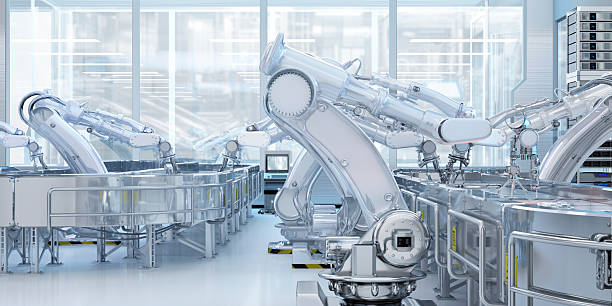
Industrial robots are widely used in manufacturing.
Common tasks include:
- Welding
- Painting
- Packaging
- Material handling
- Assembly
Advantages include:
- High precision
- Consistent quality
- Continuous operation
Industrial robots have become essential components of modern factories.
Service Robots
Service robots assist humans outside industrial environments.
Examples include:
- Hotel robots
- Delivery robots
- Cleaning robots
- Customer service robots
These systems improve efficiency and convenience.
Medical Robots
Healthcare has become one of the most important applications for robotics.
Medical robots assist with:
- Surgery
- Rehabilitation
- Diagnostics
- Patient care
Robotic surgery systems enable highly precise procedures that may reduce recovery times and improve outcomes.
Humanoid Robots
Humanoid robots resemble the human body.
They typically include:
- Arms
- Legs
- Hands
- Heads
Researchers develop humanoid robots to better interact with environments designed for humans.
Potential applications include:
- Elder care
- Education
- Customer service
- Research
Mobile Robots
Mobile robots move through environments independently.
Examples include:
- Warehouse robots
- Autonomous vehicles
- Delivery robots
These robots often use AI-based navigation systems.
Autonomous Robots
Autonomous robots can perform tasks with minimal human intervention.
They make decisions based on sensor data and AI algorithms.
Examples include:
- Self-driving cars
- Agricultural robots
- Exploration robots
Collaborative Robots (Cobots)
Collaborative robots are designed to work safely alongside humans.
Unlike traditional industrial robots, cobots can share workspaces with people.
Benefits include:
- Improved productivity
- Enhanced flexibility
- Increased workplace safety
Cobots are becoming increasingly common in manufacturing environments.
Drones and Aerial Robots
Drones are flying robots capable of autonomous or remote-controlled operation.
Applications include:
- Photography
- Agriculture
- Surveillance
- Disaster response
- Delivery services
AI enables drones to navigate complex environments and avoid obstacles.
Underwater Robots
Underwater robots explore and operate in aquatic environments.
Uses include:
- Ocean research
- Pipeline inspection
- Environmental monitoring
- Military operations
These robots help humans access dangerous or inaccessible underwater locations.
Space Robots
Space exploration relies heavily on robotics.
Examples include:
- Planetary rovers
- Satellite servicing systems
- Robotic spacecraft
Robots can survive harsh conditions where humans cannot easily operate.
Artificial Intelligence in Robotics
AI has become one of the most important technologies enhancing robotic capabilities.
Machine Learning
Machine learning enables robots to improve performance through experience.
Computer Vision
Computer vision allows robots to interpret visual information.
Natural Language Processing
Robots can understand and respond to human language.
Decision-Making Systems
AI helps robots evaluate situations and choose appropriate actions.
Adaptive Behavior
Intelligent robots can adjust to changing environments.
The integration of AI is transforming robots from simple machines into sophisticated autonomous systems.
Robotics in Manufacturing
Manufacturing remains one of the largest robotics markets.
Automated Assembly
Robots assemble products with high precision.
Welding
Robotic welders improve consistency and safety.
Packaging
Robots handle packaging and shipping operations.
Quality Inspection
Vision systems detect defects and ensure product quality.
Material Handling
Robots transport materials efficiently throughout facilities.
These applications increase productivity while reducing costs.
Robotics in Healthcare
Healthcare robotics continues expanding rapidly.
Surgical Robotics
Robotic-assisted surgery offers:
- Greater precision
- Smaller incisions
- Faster recovery
Rehabilitation Robots
These systems help patients regain mobility after injuries.
Elderly Care
Robots may assist aging populations with daily tasks.
Hospital Automation
Robots deliver supplies, medications, and equipment.
Diagnostic Support
AI-powered robots assist healthcare professionals in identifying diseases.
Robotics in Agriculture
Agriculture faces growing demands for productivity and sustainability.
Robots help address these challenges.
Autonomous Tractors
These vehicles perform farming tasks with minimal supervision.
Harvesting Robots
Robots can identify and pick crops.
Weed Control
AI systems distinguish weeds from crops and target treatment precisely.
Crop Monitoring
Robots collect data about plant health and growth.
Livestock Management
Robotic systems monitor animal welfare and productivity.
Robotics in Transportation
Transportation is undergoing major transformation through robotics and AI.
Self-Driving Cars
Autonomous vehicles use:
- Cameras
- Radar
- Lidar
- AI algorithms
to navigate roads safely.
Autonomous Trucks
These systems may improve logistics efficiency.
Delivery Robots
Ground-based robots deliver packages and food.
Autonomous Ships
Researchers are developing self-navigating maritime vessels.
Robotics in Warehousing and Logistics
Modern warehouses increasingly rely on robotics.
Automated Storage Systems
Robots retrieve and organize inventory.
Order Fulfillment
Robotic systems process customer orders quickly.
Inventory Tracking
AI-powered robots monitor stock levels.
Package Sorting
Robots sort items with speed and accuracy.
E-commerce growth has accelerated investment in warehouse automation.
Robotics in Retail
Retail businesses use robots for:
- Inventory management
- Customer assistance
- Shelf monitoring
- Cleaning operations
These applications improve efficiency and customer experiences.
Robotics in Education
Educational robots help students learn:
- Programming
- Engineering
- Mathematics
- Problem-solving
Robotics education encourages creativity and innovation.
Students gain practical experience with emerging technologies.
Robotics in Defense and Security
Military organizations use robotics for:
- Surveillance
- Reconnaissance
- Bomb disposal
- Logistics support
Security applications include monitoring critical infrastructure and public spaces.
Robotics in Disaster Response
Robots can enter dangerous environments that are unsafe for humans.
Examples include:
- Earthquake zones
- Nuclear accidents
- Firefighting operations
- Flood response
These systems help save lives while reducing risks to rescue teams.
Robotics in Space Exploration
Space agencies rely heavily on robotics.
Planetary Exploration
Robotic rovers investigate planetary surfaces.
Satellite Maintenance
Future robots may repair satellites in orbit.
Space Construction
Researchers are exploring robotic assembly of space infrastructure.
Deep Space Missions
Robots can travel farther and survive longer than human explorers in many situations.
Benefits of Robotics
Robotics offers numerous advantages.
Increased Productivity
Robots can operate continuously.
Improved Accuracy
Machines perform tasks with high precision.
Enhanced Safety
Robots handle dangerous work environments.
Cost Reduction
Automation can lower operating costs.
Consistency
Robots produce reliable results.
Greater Efficiency
Tasks are completed faster and more effectively.
These benefits drive widespread adoption across industries.
Challenges in Robotics
Despite progress, robotics faces several challenges.
Technical Complexity
Developing advanced robots requires sophisticated engineering.
High Costs
Robotic systems can be expensive to design and implement.
Maintenance Requirements
Robots require regular servicing and updates.
Environmental Variability
Real-world environments are often unpredictable.
Power Limitations
Battery life remains a challenge for many mobile robots.
Researchers continue working to overcome these obstacles.
Human-Robot Interaction
As robots become more common, effective interaction between humans and machines becomes increasingly important.
Communication
Robots must understand human instructions.
Safety
Systems must operate safely around people.
Trust
Users need confidence in robotic technologies.
Usability
Robots should be intuitive and easy to operate.
Human-centered design is critical for successful robotic adoption.
Ethical Issues in Robotics
Robotics raises important ethical questions.
Privacy
Robots often collect large amounts of data.
Employment
Automation may affect certain job categories.
Accountability
Determining responsibility for robotic actions can be complex.
Bias
AI-driven systems may inherit biases from training data.
Autonomous Decision-Making
Questions arise when robots make independent decisions affecting humans.
Addressing these issues is essential for responsible technological development.
Robotics and Employment
The impact of robotics on jobs is widely discussed.
Job Automation
Some repetitive tasks may be automated.
Workforce Transformation
Many jobs will evolve rather than disappear.
New Career Opportunities
Robotics creates demand for:
- Engineers
- Programmers
- Technicians
- AI specialists
- Data scientists
Historically, technological progress has often generated new industries and occupations.
The Future of Robotics
The future of robotics is expected to be highly dynamic.
Emerging trends include:
- More intelligent robots
- Advanced AI integration
- Improved autonomy
- Better human-robot collaboration
- Increased mobility
- Enhanced sensory capabilities
Robots will likely become more capable, affordable, and accessible.
Emerging Technologies Shaping Robotics
Several technologies are accelerating robotic innovation.
Artificial Intelligence
AI enables intelligent decision-making.
Machine Learning
Robots improve through experience.
5G Connectivity
High-speed communication supports real-time robotic operations.
Edge Computing
Local processing improves responsiveness.
Internet of Things (IoT)
Connected devices provide valuable data.
Advanced Sensors
Improved perception enhances performance.
Together, these technologies are driving the next generation of robotics.
Robotics and Smart Cities
Future cities may incorporate robotic systems for:
- Public transportation
- Infrastructure maintenance
- Waste collection
- Emergency response
- Environmental monitoring
Robots could help create safer and more efficient urban environments.
Robotics and Sustainability
Robotics can support sustainability goals through:
- Precision agriculture
- Energy efficiency
- Waste reduction
- Environmental monitoring
- Resource optimization
Intelligent automation may play a significant role in addressing global environmental challenges.
Common Misconceptions About Robotics
Robots Are Not Always Humanoid
Most robots do not resemble humans.
Robots Are Not Fully Independent
Many robots still require human oversight.
Robots Do Not Possess Human Consciousness
Even advanced AI systems lack human awareness and emotions.
Robotics Is More Than Manufacturing
Robots are used in healthcare, agriculture, transportation, education, and many other fields.
Robots Are Tools
Their effectiveness depends on design, programming, and human guidance.
Understanding these realities helps separate science fiction from actual technology.
Robotics in the Next Decade
The coming decade may bring major advances.
Potential developments include:
- Household service robots
- Fully autonomous delivery systems
- Smarter healthcare assistants
- Advanced agricultural automation
- Space construction robots
- More capable humanoid robots
These innovations could fundamentally change how people live and work.
Conclusion
Robotics is one of the most transformative technological fields of the modern age. By combining engineering, electronics, computer science, sensors, and artificial intelligence, robotics enables machines to perform physical tasks with increasing autonomy and intelligence.
From manufacturing plants and hospitals to farms, warehouses, homes, and space missions, robots are becoming essential tools that improve productivity, safety, efficiency, and innovation. The integration of AI has elevated robotics beyond simple automation, creating machines that can learn, adapt, perceive their environments, and make decisions in real time.
While challenges related to cost, complexity, ethics, employment, and regulation remain, the potential benefits of robotics are enormous. As technology continues advancing, robots will likely become more intelligent, collaborative, and deeply integrated into everyday life.
Understanding robotics is increasingly important in a world where physical machines and artificial intelligence are working together to solve complex problems and expand human capabilities. Robotics is not simply about building machines—it is about creating intelligent systems that enhance human potential and help shape the future of society.
As the integration of physical machines with AI intelligence continues to accelerate, robotics will remain at the forefront of innovation, driving progress across industries and opening new possibilities that were once imagined only in science fiction.